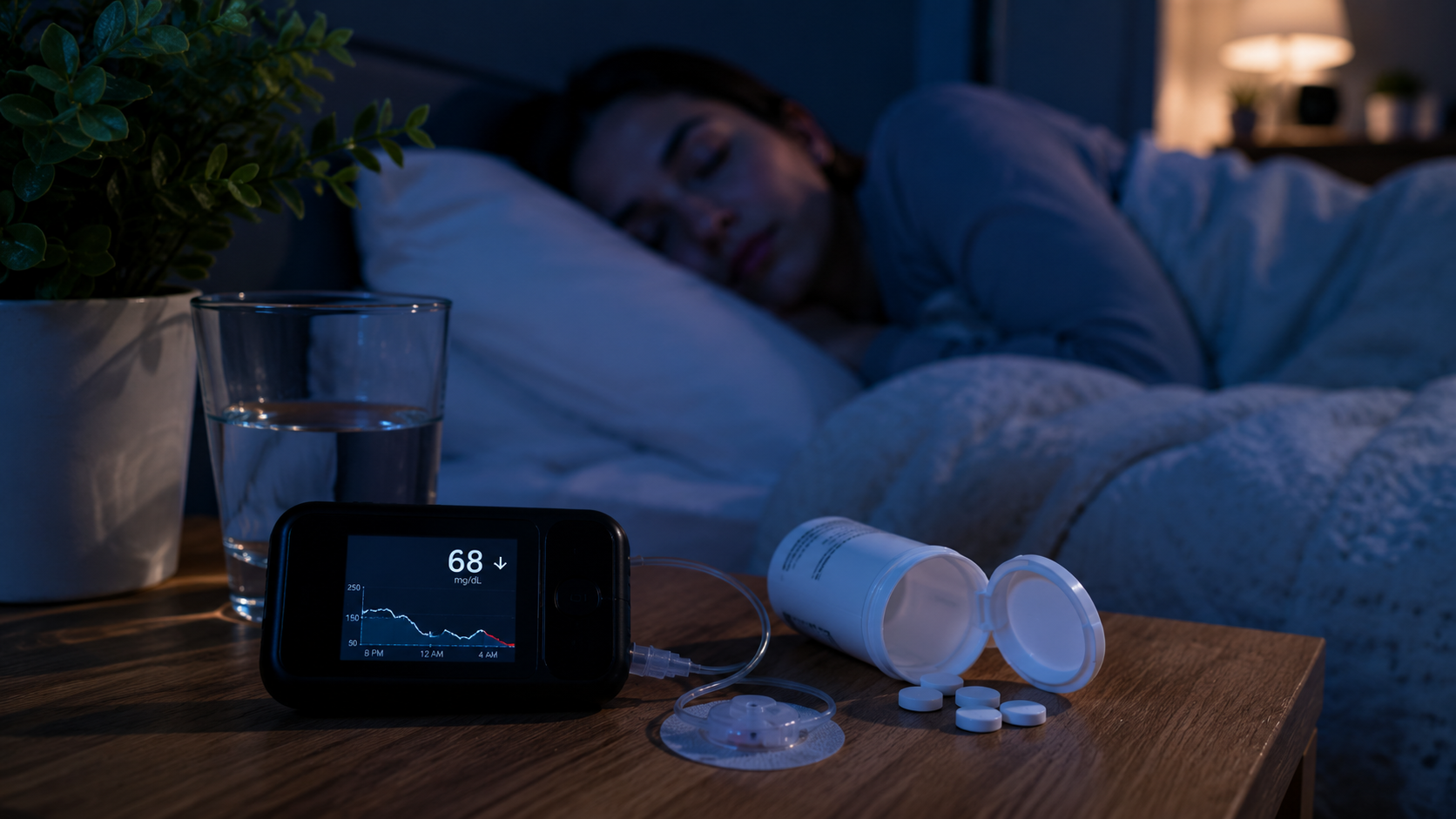
You wake up at 2am to your CGM alarm. Blood sugar is dropping. You pause your pump, eat some glucose tablets, and wait. This has become your routine several times a week. And somehow the lows keep happening.
The pause feels logical. Stop the insulin, stop the low. The problem is that the insulin causing this low left your pump roughly an hour ago. Pausing delivery does nothing to what is already in your system working its way toward peak activity.
What This Post Covers
- The pharmacokinetic timeline that explains why pausing fails
- How the algorithm is making decisions — and why overrides corrupt that process
The Pharmacokinetics of Why the Pause Fails
Rapid-acting insulin analogs follow a predictable absorption curve after subcutaneous delivery:
If your blood sugar is dropping at 2am, the insulin driving that drop was delivered between 12:30 and 1:15am. That insulin has already been absorbed from the subcutaneous tissue and is circulating in your bloodstream at or near peak activity.
Pausing your pump at 2am stops insulin that would affect your blood sugar between 3 and 4am — not the insulin causing the current low. It does not recall or inactivate what is already in your system.
In some cases, the pump pause creates a gap in basal coverage that contributes to a rebound high several hours later — which then requires a correction bolus, which can itself create another low. The pattern compounds.
The only thing that stops an in-progress low is eating fast-acting carbohydrates delivered faster than the existing insulin can clear it. Glucose tablets and gels, which absorb directly through oral mucosa without requiring gastric transit, are the most pharmacologically rational choice.
Why Activity Mode at Bedtime Creates the Problem It Is Meant to Solve
Activity mode on most pumps raises the algorithm's target to around 150 mg/dL. The higher target exists because the algorithm expects physical movement to create downward blood sugar pressure that it needs to counteract preemptively.
When you activate activity mode while sedentary:
- No downward sugar pressure from movement exists
- The algorithm holds around 150 mg/dL, delivering less insulin than your body needs
- Blood sugar rises and stays elevated for the duration of activity mode
- When the mode ends or you wake up, a correction is needed
- That correction can drive blood sugar lower than intended
“Using activity mode to prevent nighttime lows is applying a tool designed for a physiological state your body is not in. It reliably produces the opposite of the intended result.”
What You Can Do
Treat nocturnal lows with glucose tablets — and leave the pump running
The insulin driving the low was delivered 60 to 90 minutes ago. The only effective response is glucose that absorbs faster than the existing insulin can clear it.
Avoid Activity Mode at bedtime unless you are physically active
It is designed for exercise, not sleep. Using it at night can cause the blood sugar swings you are trying to prevent.
Work with your care provider to review your pump settings
If nighttime lows keep happening, basal rates, correction factors, and insulin sensitivity settings all play a role. A CDCES who knows your pump can help fine-tune these for your body's specific needs.
When to Get Help
If you are dealing with frequent nighttime lows and cannot seem to fix the pattern, a certified diabetes care and education specialist who understands automated insulin pumps can review your CGM and pump data, pinpoint where the problem lies, and adjust your settings to prevent future lows.
At Balance Diabetes Wellness, Kelsie Lewis works with people with Type 1 diabetes to optimize their insulin pumps, including those using Omnipod 5, Insulet, Beta Bionic, and Medtronic systems.