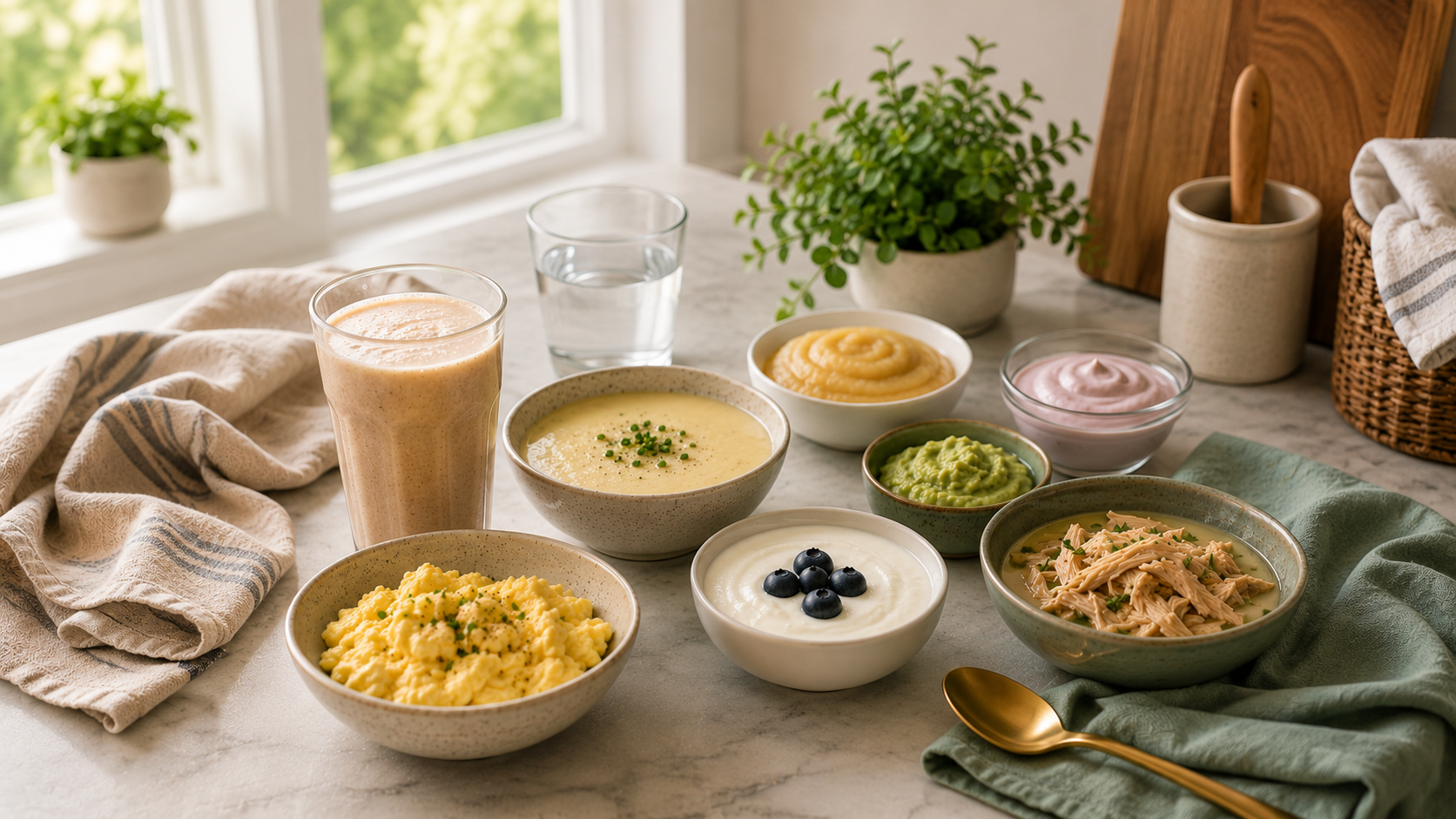
You just had a dental extraction, oral surgery, or another procedure that left you on a soft food diet for a week. So you did what anyone would do. Mashed potatoes. Potato soup. Macaroni and cheese. Maybe some pudding.
And then your blood sugar told you exactly what it thought about that.
Soft food diets and diabetes management feel like they are working against each other — but they do not have to. The problem is that most people default to a high-carb soft food plan because nobody tells them there is another option.
What This Post Covers
- Why traditional soft foods cause blood sugar spikes
- High-protein alternatives that are just as easy to eat
- What to do if your GLP-1 medication was paused during recovery
- How to stay in control when your normal routine is completely disrupted
Why Traditional Soft Foods Are a Blood Sugar Problem
When a provider tells you to eat soft foods, most people hear mashed potatoes, macaroni and cheese, cream soups, and pudding. These feel safe and manageable when chewing is painful.
But all of those options share the same profile:
- High in carbohydrates
- Low in protein
- Digest quickly
- Push blood sugar up fast
The fix is not to avoid soft foods. It is to build your soft food choices around protein first — then find preparations that make those proteins easy to eat. Once you know what to look for, the list is much longer than most people expect.
High-Protein Soft Foods That Actually Work
Greek yogurt
Plain Greek yogurt provides approximately 17 grams of protein per serving, requires no chewing, and delivers protein efficiently with far fewer carbohydrates than pudding or yogurt-based desserts. Eat it on its own or with a small serving of soft fruit.
Protein shakes — but read the label first
Standard nutritional shakes like original Ensure can contain 40 or more grams of carbohydrate per bottle — enough to cause a meaningful spike. High-protein, low-carbohydrate versions are a completely different product.
Soft-scrambled eggs
Naturally easy to eat, solid protein, minimal carbohydrate. Can mix in egg whites for more volume and protein. A small amount of low-fat cottage cheese mixed in also boosts protein without changing texture significantly.
Fish
Baked cod, salmon, or tilapia is naturally flaky and tender. Requires very little jaw effort even with limited movement. Often overlooked as a soft food option.
Beans
Canned beans can be lightly mashed, used as refried beans, or blended smooth. A cup of beans provides approximately 15 grams of protein alongside fiber that slows blood sugar absorption.
Slow cooker meats
This is the most underused tool during soft food recovery. Meats cooked on low for 6 to 8 hours break down so thoroughly they shred with almost no effort. Tender slow-cooked chicken, beef, or pork requires essentially no chewing and delivers the protein that mashed potatoes simply cannot.
“This one change can make the difference between a recovery week that wrecks your blood sugar and one that does not.”
Maintaining Your Goals When Life Gets Complicated
Medical procedures, dental work, and unexpected health events are not detours from diabetes management. They are part of the road itself.
The goal during these periods is not perfection. It is doing the best you can with the options available. Choosing a potato soup and pairing it with a protein shake is a win. Asking your care team what to eat instead of guessing is a win. Monitoring your blood sugar even when your routine is completely off is a win.
What carries people through medical disruptions is not rigid adherence to a perfect plan. It is the habits and knowledge built before the disruption happened. Those carry forward even when everything else feels chaotic.
What You Can Do
Build meals around protein first, then find a soft preparation
Slow-cooked meats, Greek yogurt, soft-scrambled eggs, fish, and beans all meet soft food requirements without the blood sugar consequence of mashed potatoes and pasta.
Read labels on nutritional shakes before buying
High-protein, low-carbohydrate versions are meaningfully different from standard shakes — the difference can be 30 or more grams of carbohydrate per bottle.
Use your slow cooker during recovery
Meats cooked 6 to 8 hours on low are tender enough to eat without significant chewing and deliver far more protein than traditional soft food staples.
Give yourself permission to use convenient options during recovery
Protein shakes, Greek yogurt, and canned beans are legitimate, nourishing choices. There is no benefit to struggling through elaborate meal preparation while you are in pain.
When to Get Help
If you have an upcoming procedure that will limit what you can eat, or if you are currently managing diabetes through a medical complication and your blood sugar is not where you want it to be, that is exactly the kind of situation where a registered dietitian can help you build a specific, practical plan before the disruption happens rather than after.